Pomaderris Aspera (Pomaderris Hazel)
Owner: Gareth
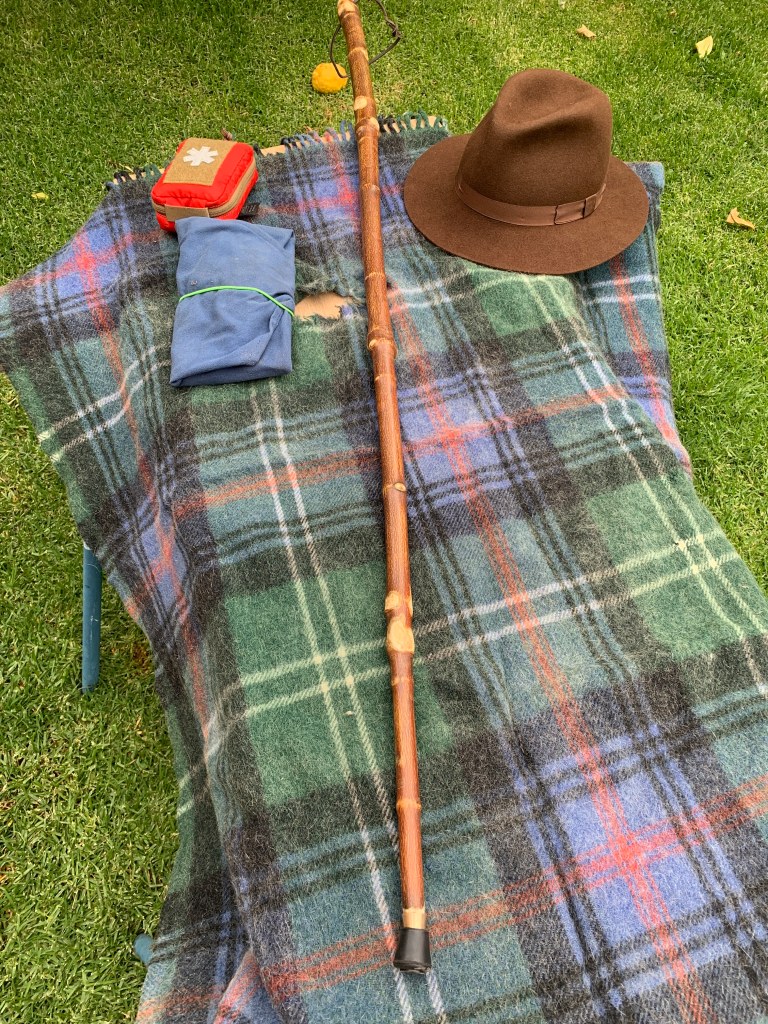
Out on the edges of the Sherbrooke forest, lies Sherbrooke Lodge road. A delightful no through access road for residents fortunate to own real estate. My walk on Christmas eve 2019 took me down this road as a thoroughfare to Grants picnic area to further my journey onwards to Belgrave. It would appear that around this time a Parks Vic work crew were cleaning up a cluster of new growth, sycamore maple. Casting my eye through the pile I selected this specimen as my walking stick for the rest of my walk and then into the workshop for further crafting. It now belongs to you.
The Sycamore Maple is an invasive species and thrives in the dandenong’s wet sclerophyll forests. If you walk anywhere in the ranges you will easily spot this tree and the new growth existing in the eucalypt forest.
Acer pseudoplatanus is a moderately sized large tree with a spreading crown usually growing 12-25 m tall, but occasionally reaching up to 35 m in height. It loses all of its leaves during autumn and winter. The sycamore is native to central and eastern Europe and western Asia. The sycamore has been introduced to suitable locations outside Europe as an attractive tree for park, street or garden. These include the United States, Canada, Australia (Victoria and Tasmania), Chile and New Zealand. At the time of its introduction it was probably not appreciated that its prolific production of seeds might one day cause a problem to the landscape as it spread and out-competed native species. Sycamore self-seeds very vigorously, the seeds germinating en masse in the spring so that there is little, or no, seed bank in the soil.
Sycamores make new growth from the stump or roots if cut down and can therefore be coppiced to produce poles and other types of small timber. Its coppice stools grow comparatively rapidly. It produces a hard-wearing, white or cream close-grained timber that turns golden with age. The wood can be worked and sawn in any direction and is used for making musical instruments, furniture, joinery, wood flooring and parquetry.
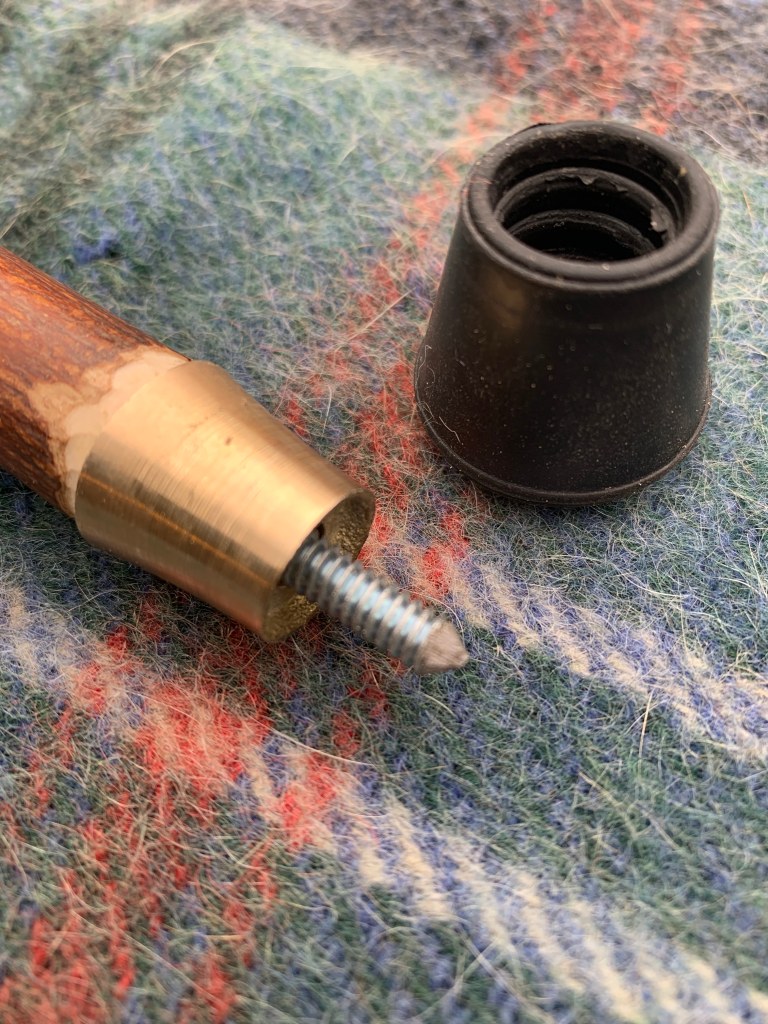
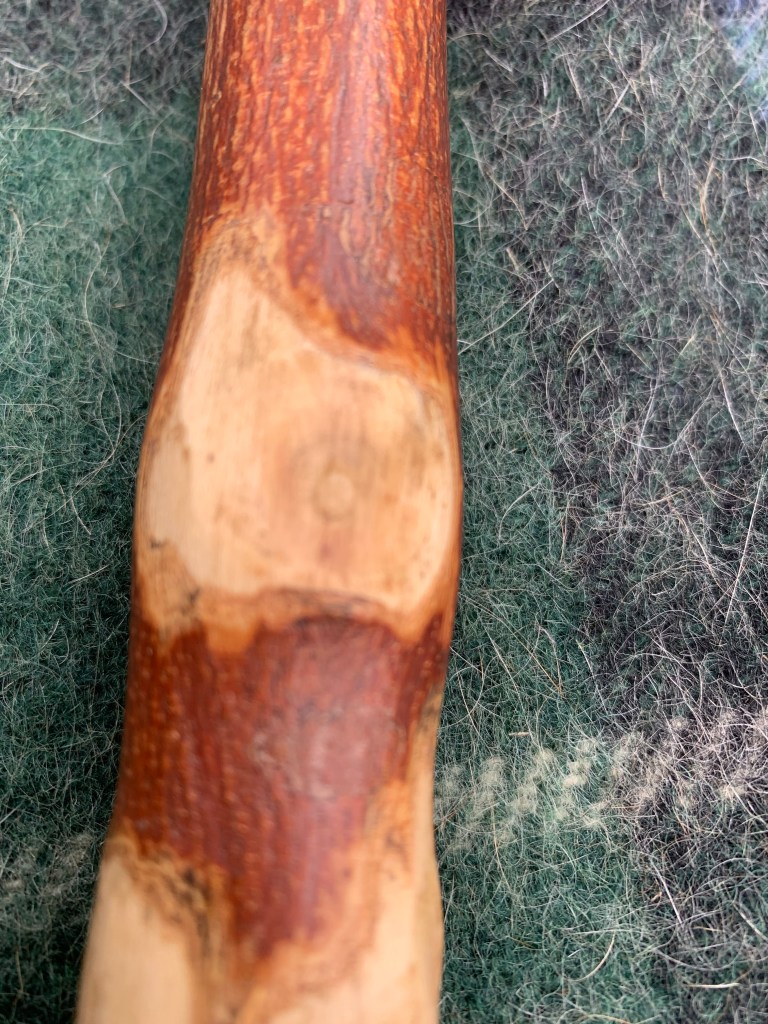
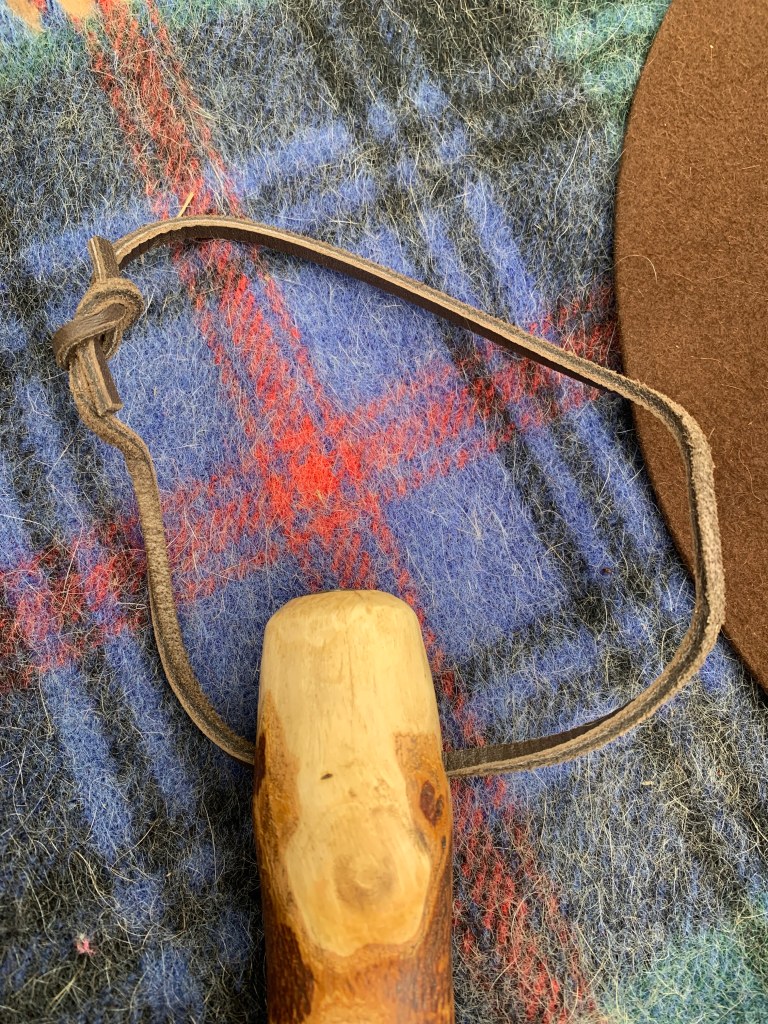
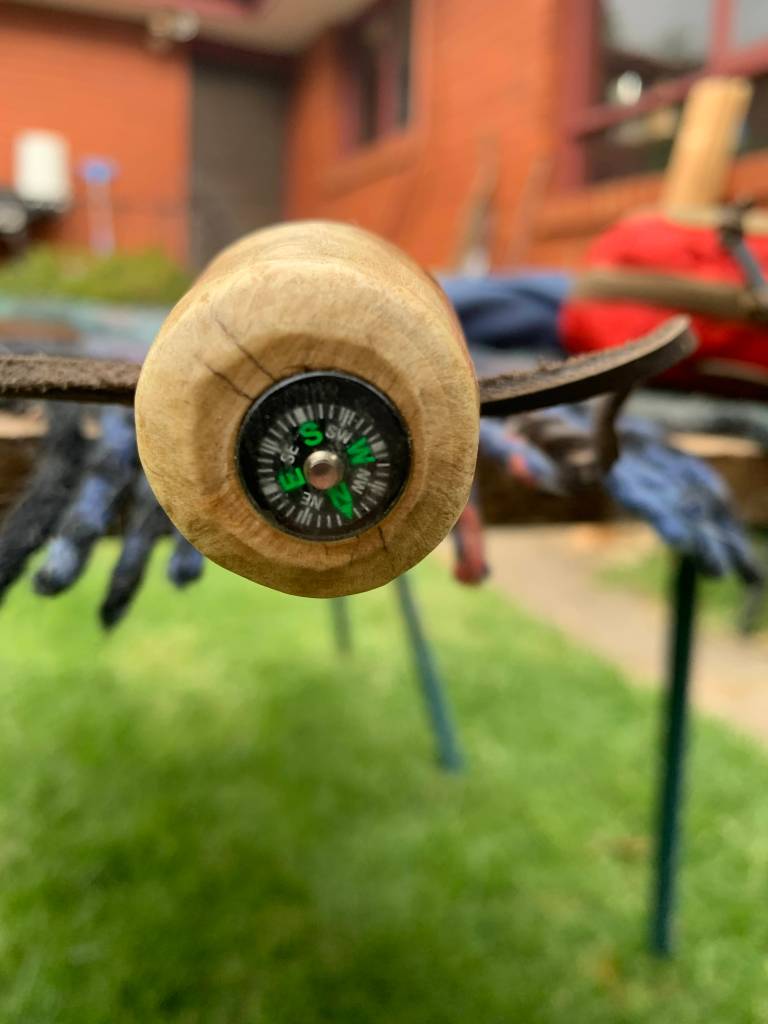
Crafting of this stick began on 17 of feb 2021. The bark would remain intact for this stick and so I started handing at 240 and then 320 grit. The branch nodules were power sanded smooth. A 6mm hole was drilled for a lanyard, the tip was shaped for a cane tip and 3/16ths coupler that would receive a sharpened bolt. A rubber stopper covers this spike during paved path walking but when one goes off piste, the spike comes into its own. The handle was chamfered with an opinel 8 pocket knife and a 20mm hole was drilled at the top to secure a small button compass.The final sanding with wet dry paper, 800 then 1200 grit. The finish is 3 coats of Danish oil over 7 days with a light sand between coats, finally, a polish with Gilly’s Carnauba with a lambswool buff.
The completed stick length is 133 cm with the rubber stopper. It tapers from 34mm at the top to 16 mm at the bottom and weighs 415 grams. It is suitable as a hand around hiking stick for heights of 170 cm to 190 cm. It was officially commissioned with serial #OOW21 on the 18th March 2021.
 The Order Of Walkers